Party Energy Management: Keeping Groups Rotating Smoothly
You’ve got the bounce house set up, the kids are excited, and the party is officially underway. Then it happens—everyone rushes the inflatable at once. Shoes pile up, kids start crowding, and suddenly what was supposed to feel fun starts to feel a little chaotic.
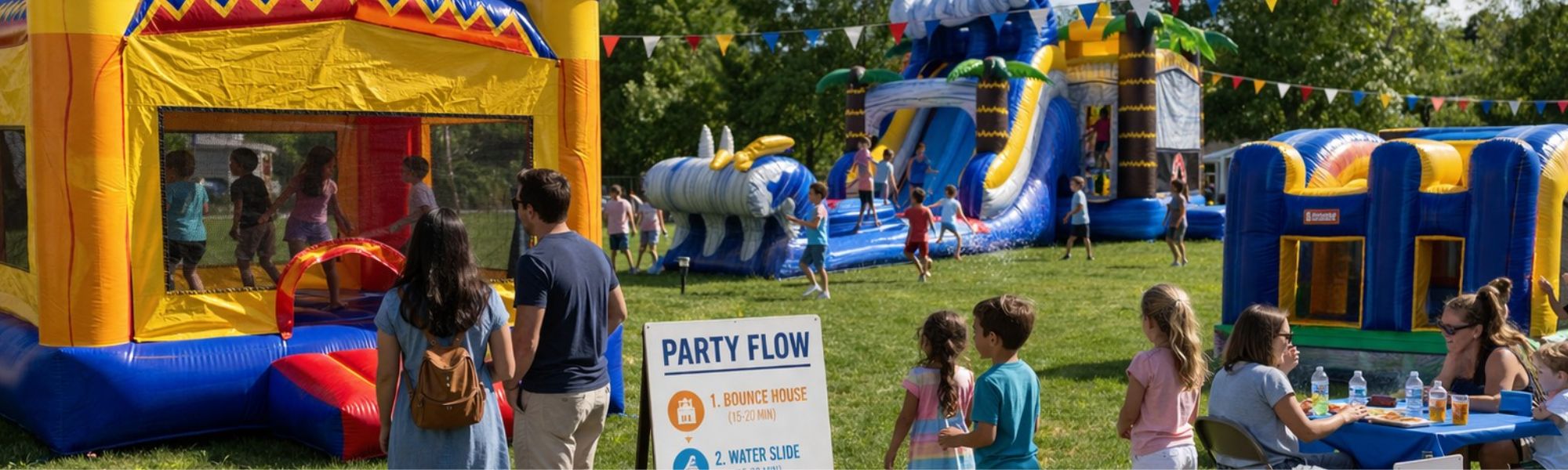
This is where party energy management makes all the difference. A simple bounce house rotation strategy can keep kids moving, prevent overcrowding, and help your event feel organized without being overly structured.
If you’re planning a birthday party or group event, here’s how to create a smooth, enjoyable flow that keeps everyone engaged—and keeps the stress off your shoulders.
Why Rotation Matters More Than You Think
Kids naturally gravitate toward the most exciting part of the party—and for most events, that’s the bounce house. Without a plan, that excitement can turn into crowding, long wait times, and frustrated guests.
A structured rotation system helps balance the energy. It gives every child a chance to participate, reduces pushing or piling, and keeps the inflatable experience safe and enjoyable.
More importantly, it keeps the party moving. Instead of everyone doing the same thing at once, you create a natural rhythm that spreads activity across the entire event.
Simple Bounce House Rotation Strategies That Work
You don’t need a complicated system to keep things organized. A few simple adjustments can completely change how your party flows.
- Group by age: Separate younger kids from older kids to keep play safe and comfortable for everyone
- Set time intervals: Rotate groups every 5–10 minutes to give everyone equal time
- Use visual cues: Designate a waiting area with cones, blankets, or chairs so kids know where to line up
- Limit capacity: Follow inflatable rider limits to avoid overcrowding and maintain safe bouncing conditions
These small steps create a predictable flow that kids quickly understand—and once they do, the party practically runs itself.
Build a Structured Party Timeline (Without Overplanning)
One of the biggest misconceptions is that structure takes away from fun. In reality, a light structure helps protect it.
Instead of scheduling every minute, think in phases. Start with open play when guests arrive, transition into more organized rotation as the group grows, and then shift into food and cake time when energy starts to level out.
This kind of structured party timeline keeps things moving naturally. Kids get bursts of high-energy play followed by natural breaks, which helps avoid overstimulation and burnout.
How to Manage Inflatable Rider Limits Without Conflict
One of the trickiest parts of party supervision is enforcing limits without turning into the “rule enforcer.” The key is setting expectations early and making the rules feel consistent—not personal.
Before the party begins, explain simple guidelines like how many kids can jump at once and how long each turn lasts. When kids understand the structure from the start, they’re more likely to follow it without pushback.
It also helps to position yourself—or another adult—near the bounce house entrance. This creates a natural supervision point where rotations happen smoothly without constant reminders.
Design Your Space to Support Flow
Your layout plays a huge role in how well your rotation system works. A well-designed space supports movement instead of fighting it.
- Create clear entry and exit paths: Avoid crowding at the bounce house opening
- Separate activity zones: Keep food, seating, and play areas distinct
- Add a waiting zone: Give kids a clear place to gather before their turn
- Position supervision nearby: Ensure adults can easily see and guide the flow
When your space supports movement, kids naturally follow the flow without needing constant direction.
FAQs: Bounce House Rotation & Party Flow
How many kids should be in a bounce house at once?
This depends on the size of the inflatable, but most units have a recommended rider limit. Following these limits helps prevent overcrowding and keeps play safe.
How long should each group stay in the bounce house?
Typically, 5–10 minutes per group works well. It keeps things fair and gives everyone a chance to participate without long waits.
Do I need someone supervising the bounce house?
Yes. Having an adult nearby helps manage rotation, enforce limits, and ensure safe play throughout the event.
What’s the best way to keep kids from crowding?
Create a clear waiting area and communicate simple rules early. Kids respond well when expectations are consistent and easy to understand.
Can rotation work for large parties?
Absolutely. In fact, rotation becomes even more important with larger groups to keep things organized and enjoyable for everyone.
The Result: A Party That Feels Fun, Not Frantic
When you manage energy instead of reacting to it, everything changes. Kids stay engaged. Parents feel more relaxed. And your party flows the way you hoped it would.
At CenTex Jump & Party Rentals, we believe great events aren’t just about the equipment—they’re about how everything comes together. With clean, safe inflatables and thoughtful setup, we help create experiences that feel easy from start to finish.
Need help choosing the right inflatable for your group size? Explore our Bounce House Rentals or get more planning tips in our Bounce House Guide.